
Modern cities are growing faster than ever. With this growth comes increased emergency call volumes, more complex incidents, and higher expectations for rapid response. Traditional dispatch systems, while once effective, are struggling to keep up with today’s demands. This is where police dispatch operations become a critical focus area for improvement.
Dispatch centers are no longer just call-taking units. They are command hubs that directly influence how quickly and safely officers respond to incidents. Delays or inaccuracies at this stage can affect outcomes on the ground within minutes. Even small inefficiencies in dispatch workflows can create serious risks in high-pressure situations.
Optimizing these systems is not just about speed. It is about improving accuracy, reducing miscommunication, and ensuring officer safety in unpredictable environments. Modern policing depends heavily on how well dispatch operations are designed and executed.
The Core Role of Police Dispatch in Emergency Response
Police dispatch serves as the central communication bridge between the public and law enforcement officers in the field. Every emergency call, incident report, or suspicious activity alert passes through dispatch before reaching responders.
This role requires fast decision-making under pressure. Dispatchers must quickly interpret incoming information, verify details, and determine the appropriate response level. At the same time, they must manage multiple incidents simultaneously without losing accuracy.
Effective police dispatch operations ensure that officers receive the right information at the right time. This includes location details, nature of the incident, potential threats, and any available background data.
In many cases, dispatchers act as the first line of risk assessment. Their decisions influence how many officers are sent, what equipment is needed, and how quickly backup is requested.
Key Performance Goals in Modern Dispatch Systems
Reducing Response Time Without Compromising Accuracy
Speed is one of the most important metrics in dispatch operations. However, faster is not always better if it leads to errors. The goal is to reduce response time while maintaining high levels of accuracy in call assessment and resource allocation.
Modern systems use structured workflows to prioritize urgent calls automatically. This helps dispatchers focus on critical decisions instead of repetitive sorting tasks.
Enhancing Situational Awareness for Dispatchers
Situational awareness means understanding what is happening in real time across multiple incidents. Dispatchers must track officer locations, ongoing emergencies, and available resources simultaneously.
Better awareness leads to better decisions. When dispatchers have a complete picture, they can allocate resources more effectively and anticipate potential complications.
Improving Officer Safety Through Better Information Flow
One of the most important goals of police dispatch operations is protecting officers in the field. Accurate and timely information can significantly reduce risk during high-stress encounters.
When dispatchers provide clear details about threats, suspect behavior, or environmental risks, officers can prepare appropriately before arriving on scene.
Technology Transforming Police Dispatch Operations
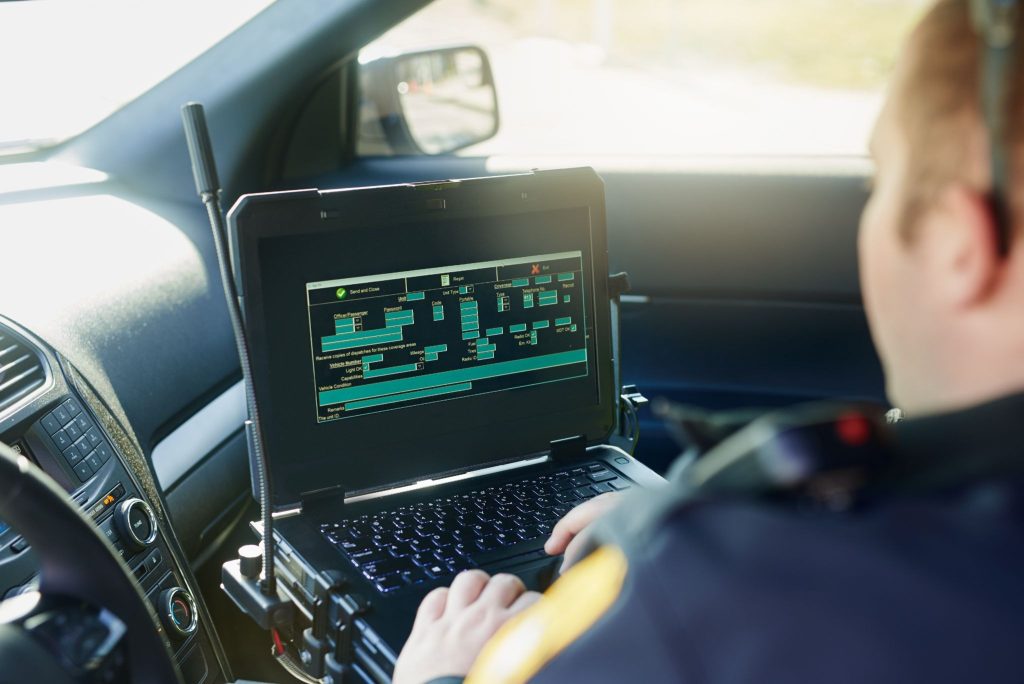
Technology has become the backbone of modern dispatch systems. Computer-Aided Dispatch (CAD) systems are now standard in most agencies. These platforms automate call logging, incident tracking, and resource assignment.
Real-time GPS tracking allows dispatchers to see the exact location of officers and incidents. This improves response coordination and reduces delays.
AI-assisted systems are also beginning to play a role. These tools can analyze incoming calls, categorize incidents, and suggest priority levels based on historical data and risk patterns.
Together, these technologies make police dispatch operations faster, more structured, and more reliable under pressure.
Communication Workflows in High-Pressure Environments
Dispatch centers operate in highly dynamic environments. Multiple emergencies can occur at the same time, requiring careful coordination and prioritization.
Call intake is the first step. Dispatchers must quickly gather essential details while calming callers who may be stressed or panicked. Information verification is critical at this stage to avoid errors.
Modern systems also support multi-channel communication. Calls are no longer the only input source. Dispatchers may receive texts, digital alerts, surveillance feeds, or automated system notifications.
Handling this information efficiently requires strong workflows and clear protocols. Without structure, important details can be missed during high-volume situations.
Data Integration and Real-Time Intelligence in Dispatch Centers
Data plays a major role in improving police dispatch operations. Modern dispatch centers are connected to multiple databases, including criminal records, vehicle registrations, and incident history logs.
This integration allows dispatchers to access critical information instantly. For example, when a call comes in, dispatchers can quickly check whether the location has a history of similar incidents.
Real-time intelligence systems also use surveillance data and sensor inputs to enhance situational awareness. This helps identify patterns and emerging threats more quickly.
Predictive analytics is another emerging tool. By analyzing past incidents, systems can help allocate resources more efficiently across different areas of a city.
Challenges Affecting Police Dispatch Operations
Despite advancements, dispatch systems still face several challenges.
Human error remains a major factor. Dispatchers work under intense pressure, often handling multiple emergencies at once. This can lead to fatigue and decision-making errors.
System outages and technical failures can also disrupt operations. Even short interruptions in communication systems can have serious consequences during emergencies.
Coordination gaps between different agencies or jurisdictions can slow down response times. When systems are not fully integrated, information may not flow smoothly between departments.
These challenges highlight the need for continuous improvement in police dispatch operations.
Training and Skill Development for Dispatch Personnel
Technology alone is not enough. Human skill remains a critical part of dispatch effectiveness.
Dispatchers require strong stress management abilities. They must remain calm while handling high-pressure and emotionally intense situations.
Technical training is also essential. As systems become more digital, dispatchers must learn how to operate complex software platforms and interpret real-time data.
Communication skills are equally important. Dispatchers must extract accurate information from callers quickly while maintaining clarity and control.
Regular training ensures that personnel can adapt to evolving systems and maintain high performance.
Officer Safety and Field Coordination Improvements
One of the most important outcomes of optimized police dispatch operations is improved officer safety.
Real-time threat updates allow officers to understand risks before arriving at a scene. Dispatchers can relay critical information such as weapon presence, suspect behavior, or environmental hazards.
GPS tracking helps coordinate backup support more effectively. If a situation escalates, nearby units can be deployed immediately.
Pre-arrival intelligence sharing ensures that officers are better prepared when they reach an incident location. This reduces uncertainty and improves decision-making in the field.
Future of Police Dispatch Operations
The future of dispatch systems is moving toward full integration and automation.
Smart dispatch ecosystems will connect emergency services, surveillance systems, and public reporting platforms into a single network.
AI-driven systems will assist in prioritizing calls and predicting resource needs. However, human oversight will remain essential for final decision-making.
Automation will reduce repetitive tasks, allowing dispatchers to focus on complex situations that require judgment and experience.
In the long term, police dispatch operations will become more predictive, data-driven, and interconnected.
Conclusion
Optimizing police dispatch operations is essential for modern law enforcement effectiveness. As cities grow and emergencies become more complex, dispatch centers play a central role in ensuring fast, accurate, and safe responses.
By combining advanced technology, structured workflows, real-time data, and skilled personnel, dispatch systems can significantly improve response outcomes.
While challenges such as human error, system reliability, and coordination gaps still exist, ongoing improvements are making dispatch operations more efficient and resilient.
The future of policing depends heavily on how well dispatch systems evolve. Faster communication, better information flow, and improved officer safety will define the next generation of emergency response systems.